
Written by Kesang Yudron, Founder and Director of Conscious Connections Nepal
On October 4, 2026, Conscious Connections Foundation (CCF) handed over 161 gas stoves, 161 hot water kettles and 300 menstrual kits ( with soap and underwear) to families from Rasuwa who lost their homes and loved ones in the Bhotekoshi flood.
On the morning of August 26, 2026, a sudden wall of water and debris came down the Bhotekoshi River from across the northern border. Within minutes it tore through Rasuwagadhi, Timure and Syafru Besi, sweeping away homes, hotels, roads and bridges. A joint government assessment later counted 32,963 people displaced from 8,317 families across five districts, with Rasuwa among the hardest hit.
Many survivors from Timure and Syafru Besi were brought to Kathmandu. They found shelter at Gosok Phuntsok Choeling Gumba, better known as Yellow Gumba (Pahelo Gumba), in Raniban, Nagarjun Municipality-2. Other families stayed at nearby monasteries, including Mustang Gumba and Nubri Gumba. The monks opened their doors, but a monastery hall is not a home, and families arrived with almost nothing.
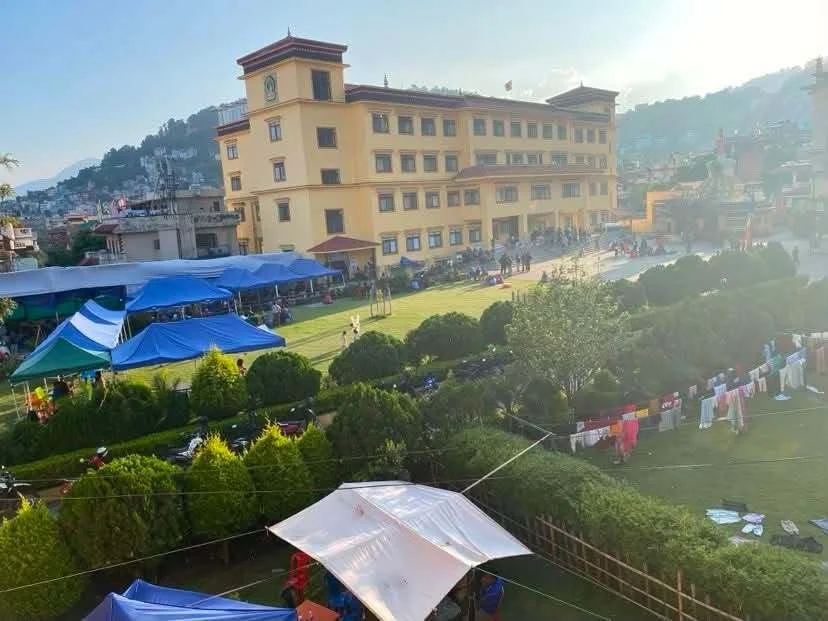
A View of Yellow Gumba Monastery. Photo Credit: CCN
A request from the community
The call for help came from Sunil Lama, the main representative of the Rasuwa families living at Yellow Gumba. Food and blankets had started to arrive from many donors. What the families still lacked were the basics of daily life: a way to cook their own meals, boil safe drinking water, and for women and girls, the dignity of proper menstrual care.
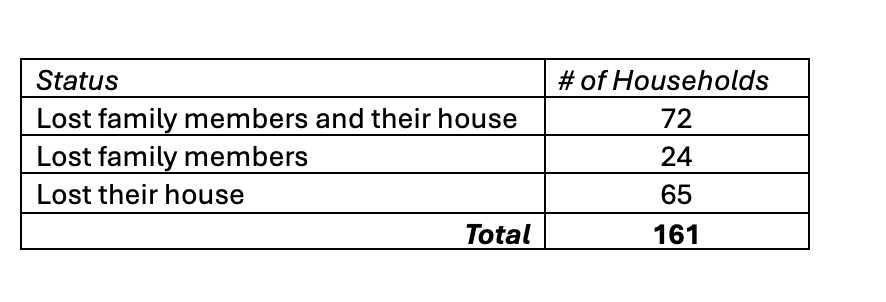
Impact of flood on Rasuwa families
Rather than guessing at needs, we worked from the community’s own list, sorted by how badly each household had been hit. According to the Government of Nepal, the families fell into three groups.
A stove and a kettle for every household
Every one of the 161 flood-affected households from Syafru Besi received one gas stove and one hot water kettle.
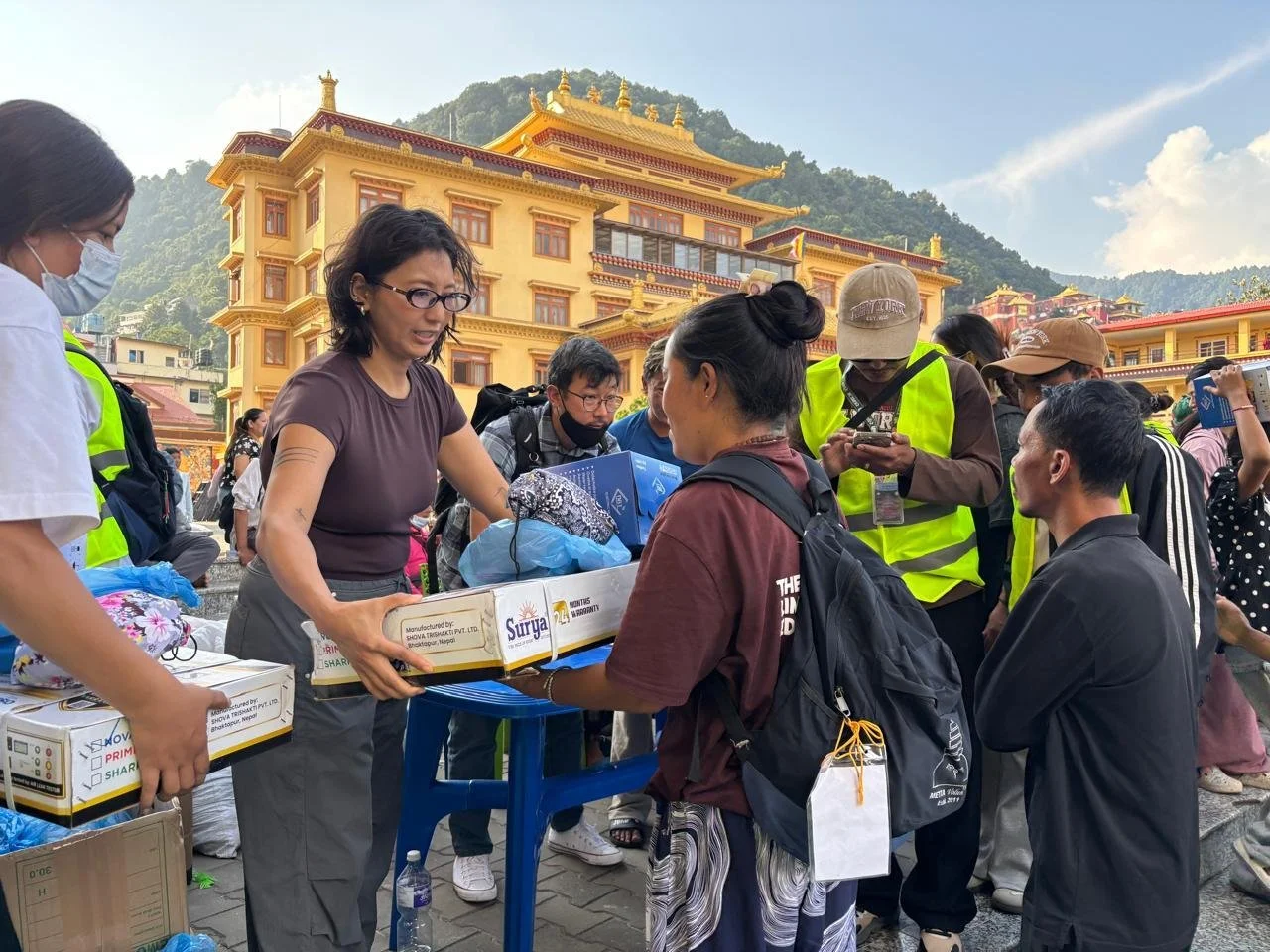
Supply distribution at Yellow Gumba. Photo Credit: CCN
A stove means a family can cook a warm meal on their own terms again. A kettle means safe, boiled water for children and elders, and a hot cup of tea on a cold Kathmandu evening. Small things, but they bring back a little of the routine the flood took away.
Dignity for 300 women and girls
In a disaster, menstrual needs are easy to overlook and hard to talk about, especially in crowded shared shelters. CCF distributed 300 menstrual kits to women and girls staying at Yellow Gumba, Mustang Gumba and Nubri Gumba. The recipients came from Syafru Besi, Timure and a few families from Amachodingmo Rural Municipality.
Each kit gives a woman privacy, comfort and one less thing to worry about while she rebuilds her life.
From preparation to distribution
The distribution was the easy part. The real work happened in the days before. Our team spent several days sourcing 161 stoves, 161 kettles and 300 kits, checking every item, matching the list against each household’s category, and packing everything so it could be handed over quickly and fairly.
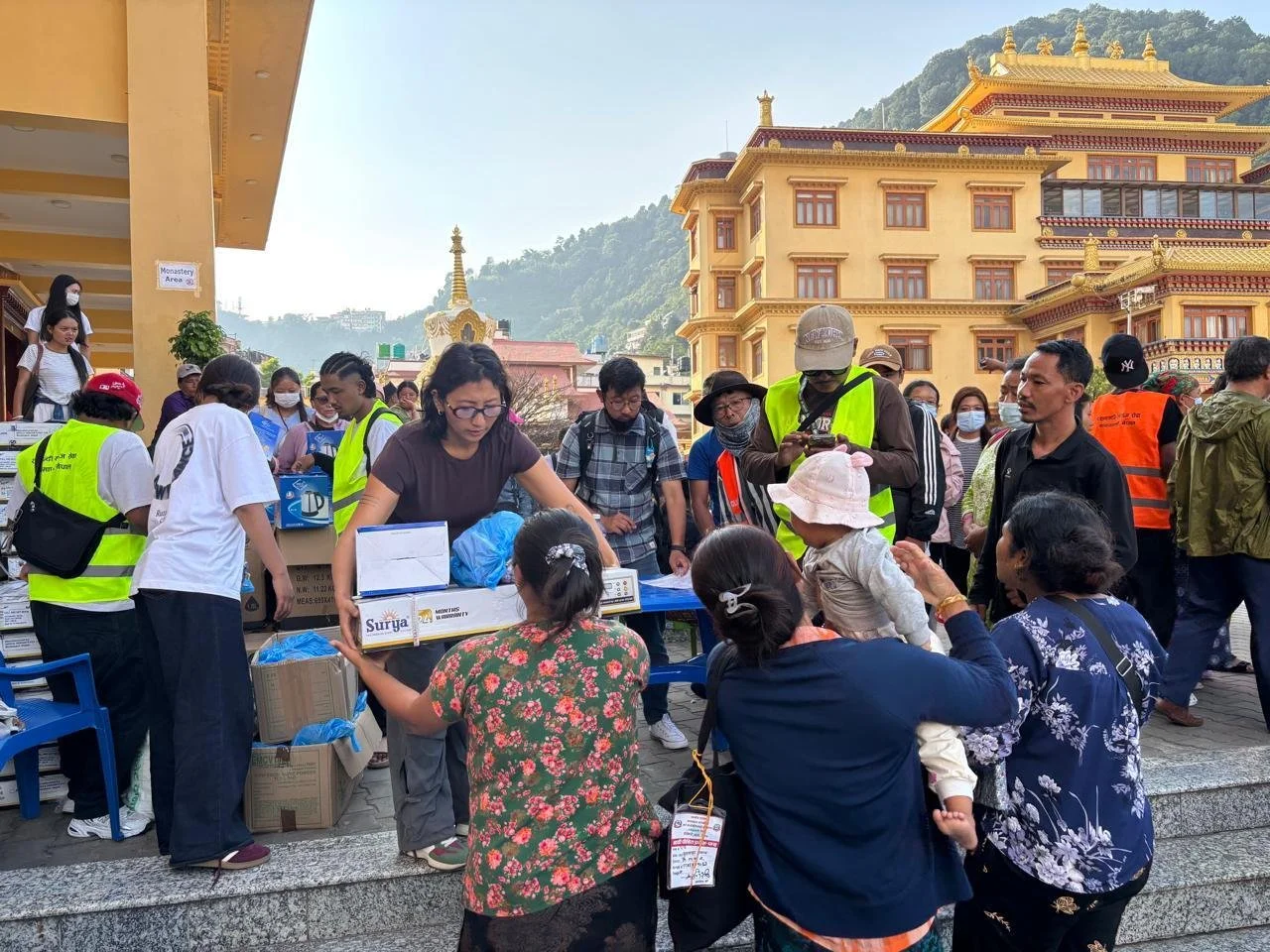
Supply distribution at Yellow Gumba. Photo Credit: CCN
On October 4, at Gosok Phuntsok Choeling Gumba, that preparation paid off. Families were called by name, each household received exactly what it was listed for, and the women’s kits were handed over. Working hand in hand with Sunil Lama and the community volunteers kept the process calm and orderly. Seeing the relief on people’s faces, and hearing a simple “thank you” from people who had lost so much, made every hour of preparation worth it.
Ghewa: saying goodbye without a body
For the Tamang and other Himalayan Buddhist communities of Rasuwa, Ghewa is the most important ritual after a death. Led by lamas, it is meant to guide the soul of the departed toward a good rebirth. It is usually held between the 7th and 49th day after death, the period during which the consciousness is believed to travel through the in-between state before its next life.
Normally, the rites begin with the body: prayers over it and then cremation. The flood took that away. Many families never found their loved ones, and some lost eight or nine members at once. Without a body, the lamas at Yellow Gumba perform the puja and Ghewa with a name card and a photograph of each person in place of the body, so the soul can still be called, prayed for and sent onward. For grieving families, completing Ghewa is how they finally say goodbye and find a measure of closure.
That is why the timing of this support matters. Once the Ghewa is complete, families will begin leaving the gumba to start over, in rented rooms, with relatives, or back in Rasuwa. A stove and a kettle will go with them as pieces of a new home.
The road ahead
The families of Rasuwa face a long road back. Many have no village to return to yet, and grief will take far longer to heal than any house. CCF will keep listening to the community and supporting them where we can.
Sunil Lama, speaking for the families at Yellow Gumba, asked us to pass on a message: “Please pass my sincere gratitude to everyone who supported this relief support. This will help people who will move out of the gumba after the Ghewa.”
Our heartfelt thanks go to Sunil Lama for reaching out, to the monasteries for sheltering the families, to our volunteers, and to every supporter who made this distribution possible.