
Written by Austin Zimmerman, Board Member
When disaster strikes, our first instinct is often to ask, How can I help?
That instinct brought people together in Spokane, Washington, on Thursday September 3rd for a fundraiser supporting the Conscious Connections Foundation (CCF) and its response to the devastating flash floods that swept through communities in Nepal on August 26th.
For many in Spokane, Nepal is more than a distant country. It is home to friends, family, colleagues, business partners and communities with whom CCF and Ganesh Himal Trading have built relationships over decades.
At the fundraiser, CCF supporter, volunteer and Nepali, Satish Shrestha and CCF co-founder Denise Attwood were joined by the Director and Founder of the Gonzaga Institute for Climate, Water, and the Environment, Dr. Brian G. Henning, to discuss the disaster, CCF’s immediate response and importantly, the long-term work needed to help communities prepare for an increasingly unpredictable climate. Centered around building resilience beyond immediate relief, roughly 50 people gathered at the local fair trade store, Kizuri in downtown Spokane to share stories and possibilities for the future.
A Disaster Nepal Did Not Cause
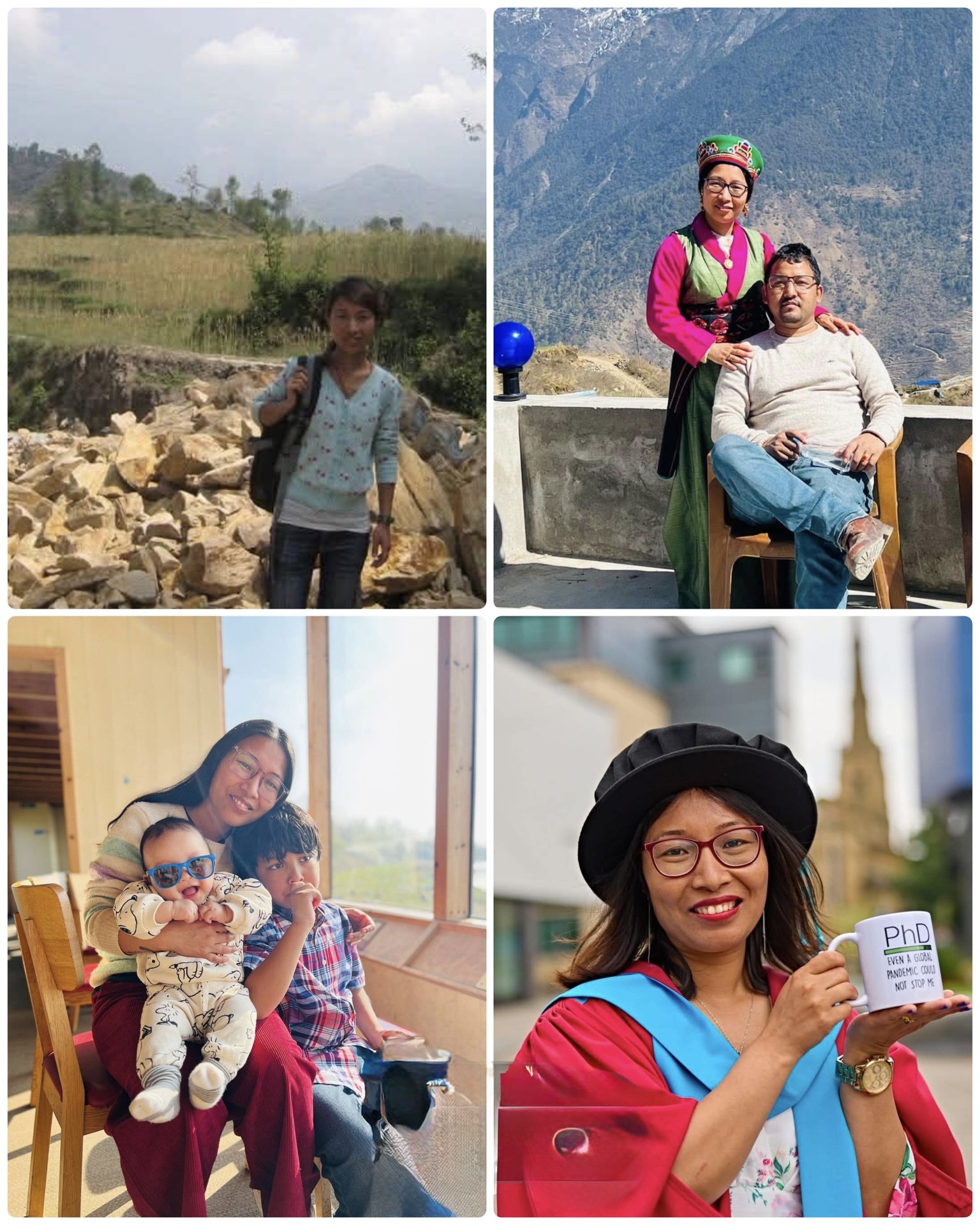
Pasang Tamang
Satish started the evening with a story of his childhood friend Pasang Tamang, now a Doctor of Public Health living in the UK. Pasang grew up in Rasuwa, Nepal, where members of her extended family remain. On August 26, she watched the community where she grew up vanish in the floods.
“Imagine that”, Satish said, “Watching, helpless, from thousands of miles away, as the place you grew up in disappears, person by person”. Pasang lost relative after relative. The devastation was so great, Satish said, that her family eventually stopped counting.
But Pasang's story is also one of determination. Determination that the people left behind, especially the children, don’t just survive this disaster, but they prosper.

Graphic Credit: Satish Shrestha
Satish went on to depict a card table. “A few players at that table keep raising the stakes, again and again, for their own gain. Nepal never even placed a bet. And yet when the table finally collapses, it’s Nepal that’s crushed underneath it.”
Nepal contributes less than one-tenth of one percent of global emissions (0.1%), Satish noted, yet communities there are experiencing the devastating consequences of a changing climate. “Rasuwa alone has been hit by flash floods five times in the last five years,” he said. “Communities rebuilding from one disaster, only to be washed away by the next.”
“That’s not an accident. That’s an injustice.”
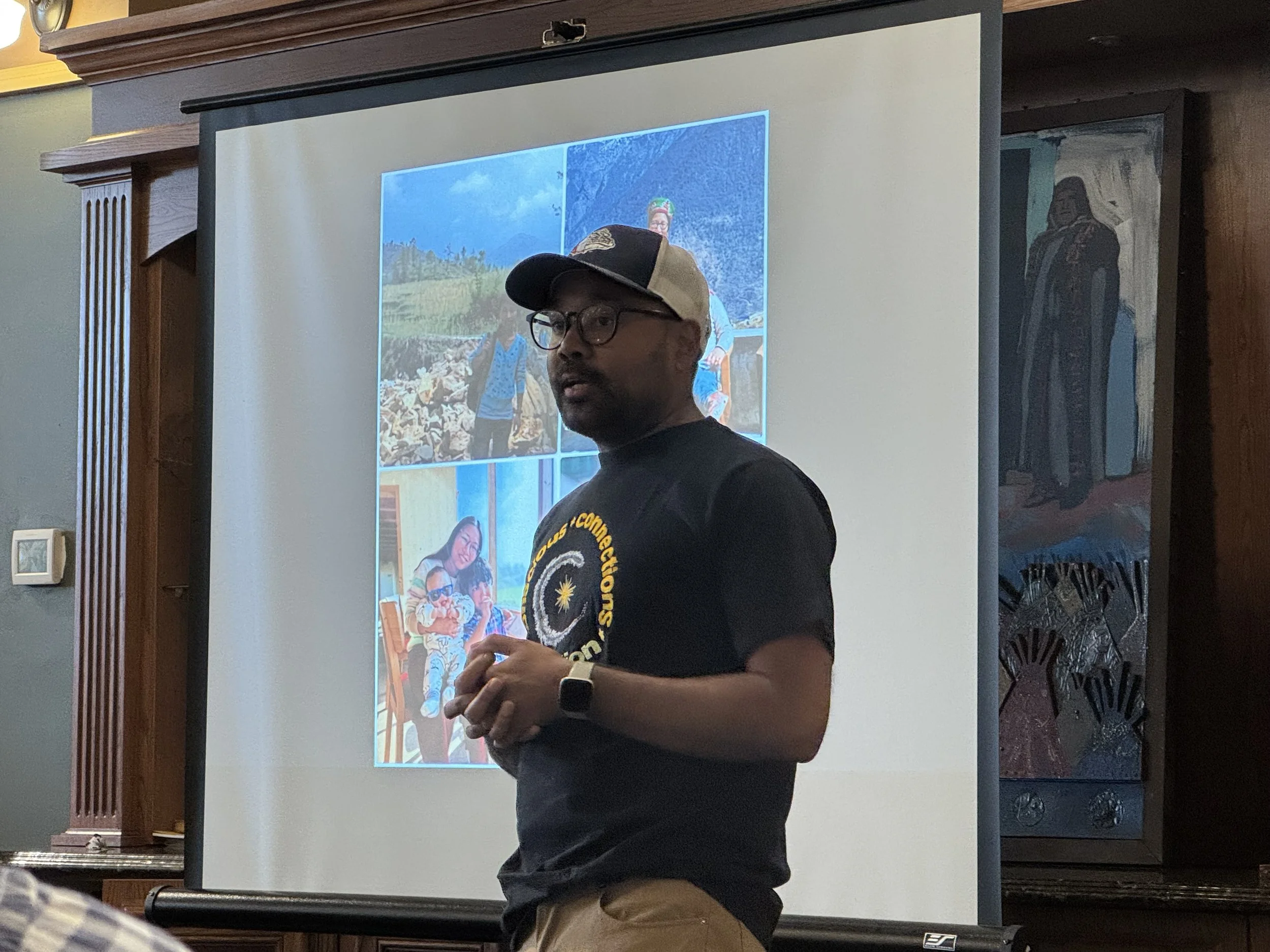
Satish Shrestha Speaking at the Fundraiser. Photo Credit: Sam Joseph
Satish returned to Pasang's story as he closed his remarks. “Pasang didn’t get to choose where she was born, or which side of that flooded river her family ended up on,” he said. “But she has chosen what happens next.”
“Being crushed by a mess you didn’t make isn’t the end of the story”, he said, “not if the people who survive have the tools to rebuild. CCF has been putting those tools directly into the hands of the women of Nepal. Education. Empowerment. The kind of support that turns survivors into the backbone of recovery for their entire community.”
“Tonight, I’m asking you to place your bet on them.”
We Create Connections and Listen to the Needs that People Bring Forward
Following Satish, CCF and Ganesh Himal Trading co-founder Denise Attwood began by acknowledging the immediate response already underway in Nepal and CCF’s role within it. “As Satish’s friend, Pasang, stated, everyone wants to help in the first few weeks after a disaster,” she said. “That instinct is good and meaningful, and many are hard at work getting relief through difficult terrain right now. CCF will help with these immediate needs as requests are made. We don’t need to be on the roads right now but we can assist those who are.”
That distinction is central to CCF's approach. CCF is not a traditional disaster relief organization. Our mission is to work alongside women, remote communities and marginalized people in Nepal, helping them develop the tools they need to create stability in their own lives and futures through education, healthcare and relationship building.
“We create connections and listen to the needs that people bring forward and provide support for them to realize how to bring about those changes they see need to be made,” Denise explained. Because CCF has longstanding relationships in Nepal, those connections become especially important when disaster strikes.
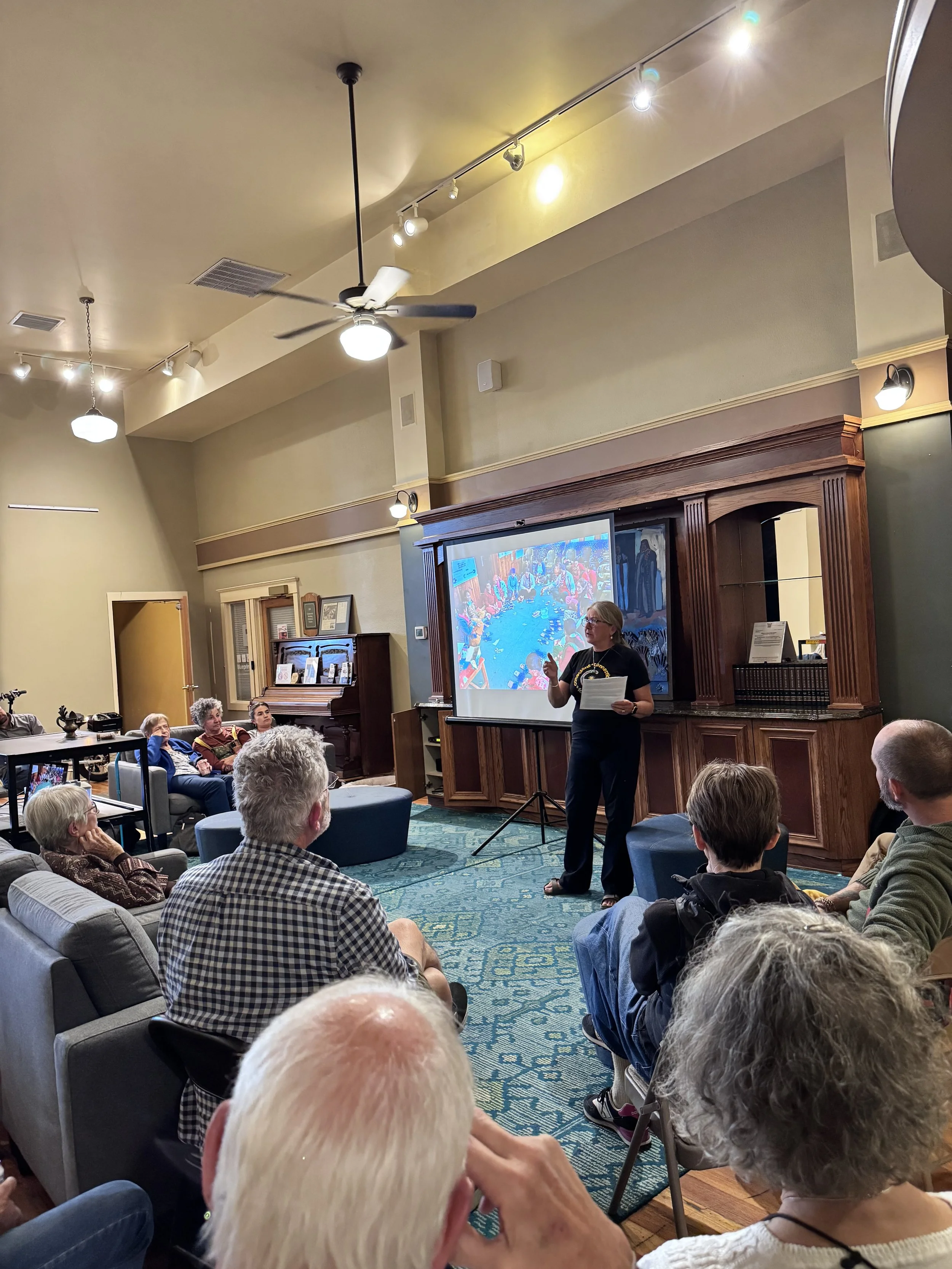
Denise Attwood Speaking at the Event
Photo Credit: Sam Joseph
CCF has already begun responding to requests from communities affected by the floods. One immediate need has been menstrual hygiene supplies. A Nepali relief organization, Hami Nepal, requested supplies for women and girls affected by the disaster. CCF was able to provide 245 reusable menstrual hygiene kits immediately with 500 additional kits to be distributed in the following weeks. “These are supplies that women have requested themselves so they can make it through the weeks and months ahead,” Denise said. “We respect that need and will continue to supply as many as are requested.”
CCF is also preparing to support children who have been orphaned by the disaster. “Some children were attending school in Kathmandu while their parents worked in the border region. Others remained in villages while their parents traveled for work. CCF's goal is to find ways to keep these children in school and provide support for the remainder of their education”, Denise explained. “CCF has worked to provide education to children for many years and we have trusted allies who have done this for years with displaced Tibetan children. Our goal will be to work to quickly find ways to continue to support the children impacted so that they can stay in school.”
“This will require a multi-year commitment to these children,” Denise said. “CCF will assess how many children can realistically be sponsored for the remainder of their education.”
Rebuilding Takes Time
CCF's response to the current floods builds on years of experience helping communities recover from disaster. Following Nepal's devastating 2015 earthquake, CCF helped rebuild the rural health clinic in Baseri. We also helped construct two earthquake-resilient earthbag homes for families who had lost everything in Baseri.
In the remote community of Ghatbesi, which lost 272 homes in the earthquake, CCF partnered with the Northside Rotary in Spokane to rebuild a primary school and help pay teachers' salaries. And in the remote community of Sertung, CCF helped residents develop products that could be sold through Ganesh Himal Trading after the earthquake destroyed much of the village.
Since 2016, those sales have generated more than $100,000 in income for the community, helping residents rebuild, install solar and water systems, and send their children to school. “These are examples of what we have done, and only to show that CCF has experience in material assistance to communities in dire need,” Denise said. “At this present moment we don’t know what will be needed but we will pay attention to what the communities ask for and assess our best ways to help.”
Preparing for the Next Disaster
For CCF, helping Nepal respond to disaster isn't only about what happens after the floodwaters recede. We are also working to put knowledge and resources into the hands of people who will be responsible for helping their communities through future crises.
“CCF has extensive experience providing menstrual hygiene and women's health education in remote Himalayan regions. Through our sister nonprofit in Nepal, Conscious Connections Nepal (CCN), we have been asked to expand this work to include emergency first aid and climate disaster preparedness”, said Denise.
CCF is developing a wilderness first aid handbook for schools, teachers, women's groups and others, with plans to incorporate this material into upcoming programs in Humla, Dolpo and Nepalgunj--remote areas prime for potential disasters. “These are direct requests from communities that know these disasters are in their future and want to prepare themselves,” Denise said.
CCF also hopes to continue developing programs that help women in remote regions cope with the impacts of climate change. “We want to be proactive in helping people so that when disasters arise they have as many tools as possible to help each other"
We Have a Moral Obligation to Act
Brian Henning of the Gonzaga Climate Institute spoke after Denise and echoed many of the sentiments she and Satish shared.
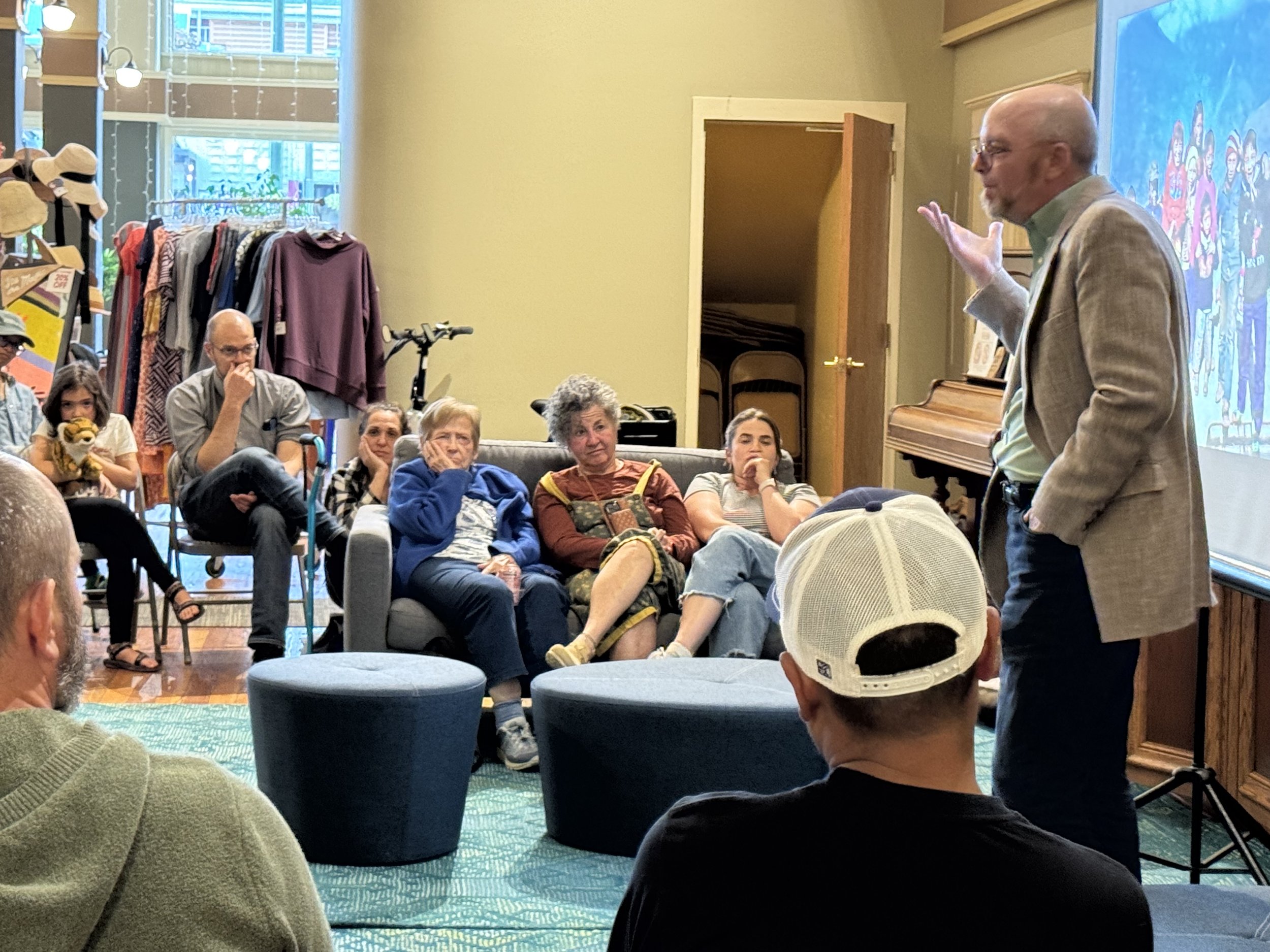
Dr. Brian Henning of the Gonzaga Climate Institute. Photo Credit: Sam Joseph
Dr. Henning began with a moment of pause to reflect on the devastating events. He then challenged the audience to acknowledge the climate crisis we are living in as well as their moral obligation to act.
It matters that we all do something.
“Most people don’t realize that more than driving an electric vehicle or recycling, investing in girls education and women’s reproductive health combined is the number one way to combat climate change according to Project Drawdown”, he stated. “It is so crucial that organizations like CCF continue to do this work with vulnerable communities around the world”.
As CCF's friend and partner in Nepal, Srishti Bajracharya, stated: “Global warming is real. Climate change is happening now. It is not a distant threat or a problem for future generations. It is happening in our mountains, our rivers, our villages, and our homes. This is not just about climate. It is about people, lives, homes, livelihoods, and our future. Let us not wait until the next disaster to acknowledge it. The world must act—and it must act now.”
Looking Ahead, Together
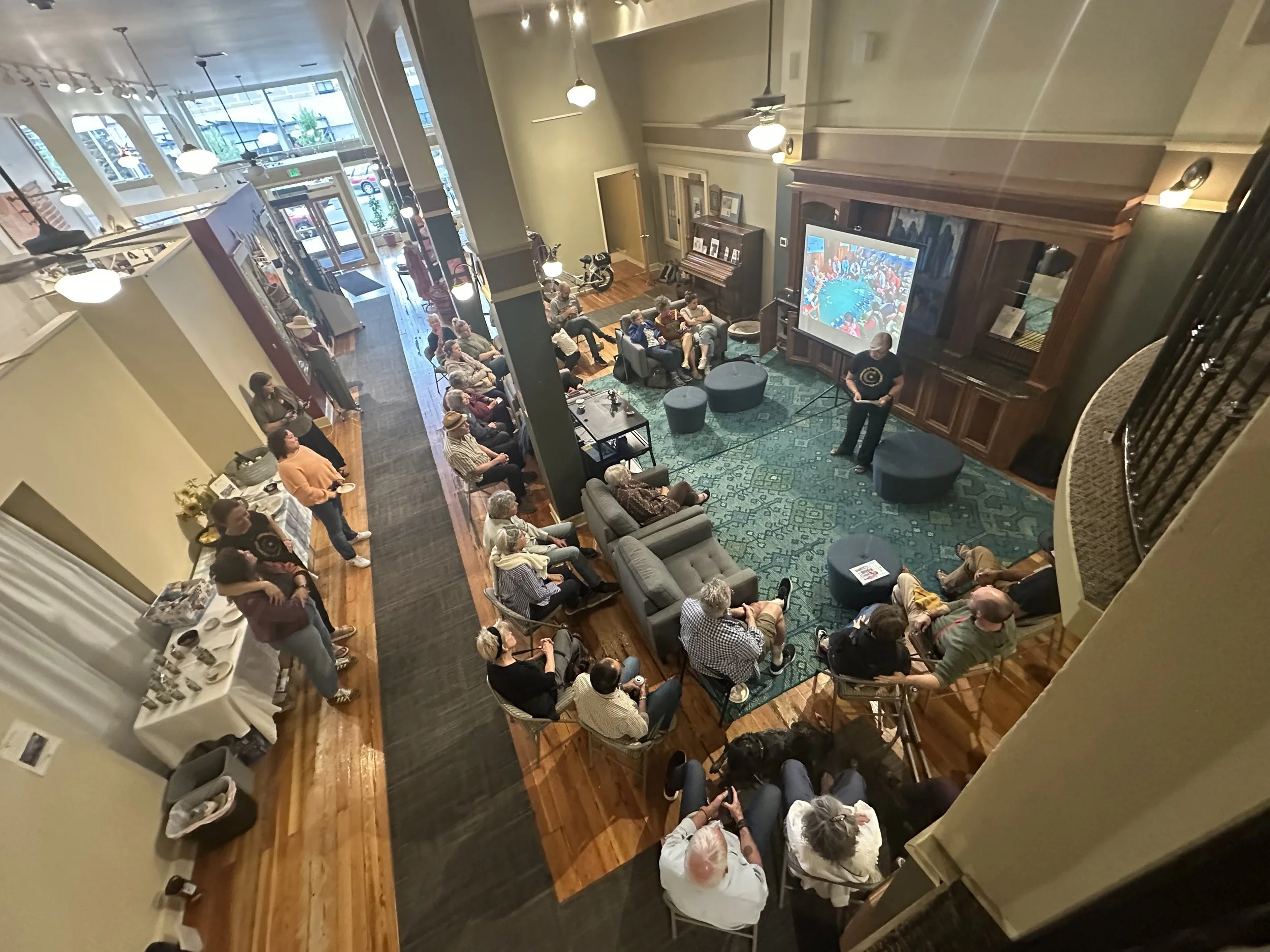
CCF Fundraising Event in Spokane. Photo Credit: Maggie Yates
Nepal's communities need help today, but they also need the resources, education and relationships that can help them face tomorrow.
The Spokane community was presented with an opportunity to be part of that work—not simply in the first weeks after a disaster, but for the years of rebuilding and preparation to follow. And they seized it.
In total, CCF has received over $17,000 in donations since the August 26th flood. Every contribution helps CCF respond to immediate needs while building toward the long-term, community-led change that can still make a difference 20 years from now.
To our friends, colleagues, and community members in Spokane - and around the world, who are supporting this critical work: THANK YOU. We cannot do it without you.